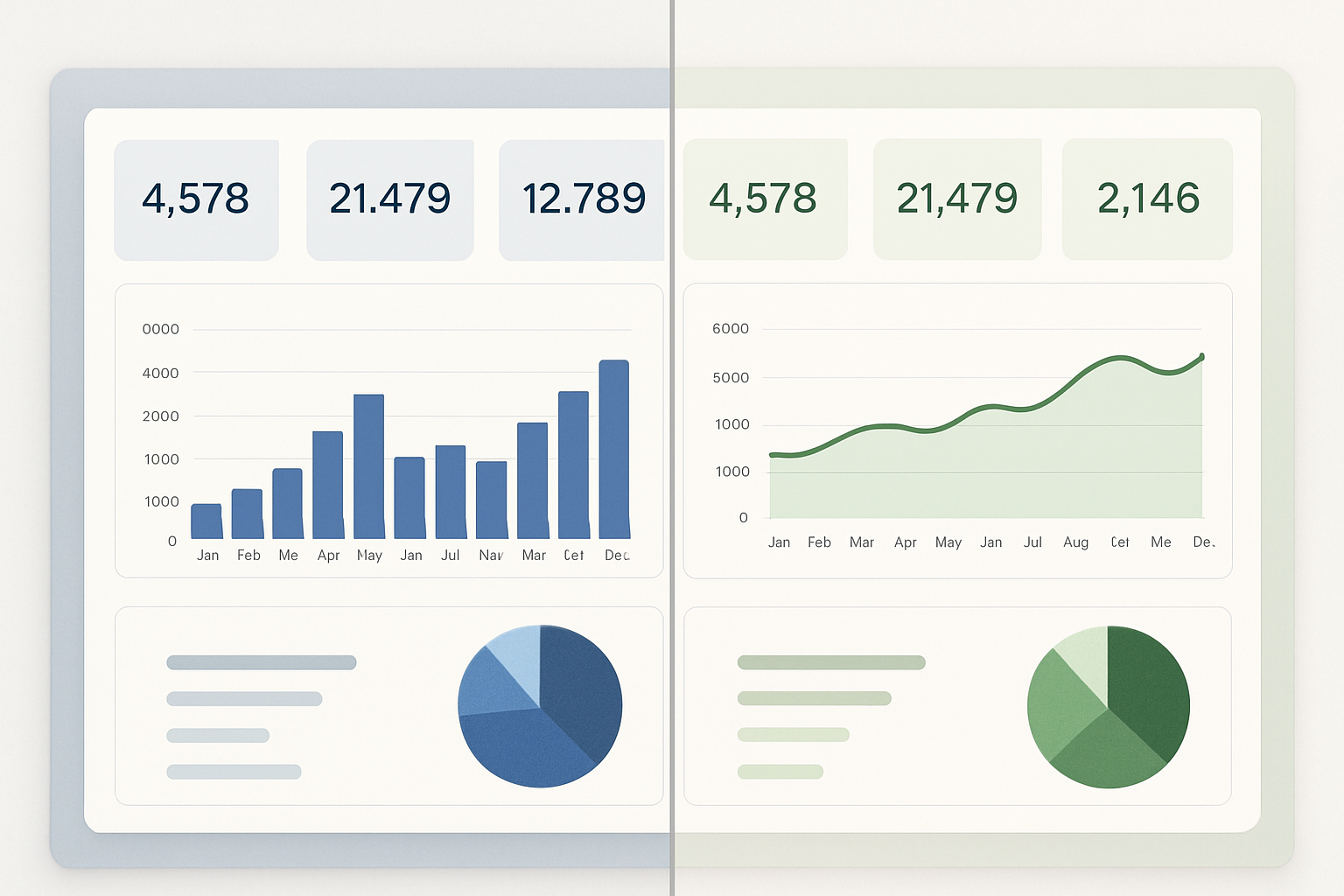
Plausible vs Fathom: Which Privacy-First Analytics Tool Should You Use?
Both Plausible and Fathom are excellent. Both are privacy-first, cookieless, GDPR-compliant, and genuinely better to use than Google Analytics 4 for the majority of websites. If you are reading this hoping for a clear winner — there is one, but it depends on your situation.
This comparison breaks down the real differences between the two tools so you can make the right call without wasting time testing both from scratch.
The Quick Summary
Before going deep: here is the practical short answer.
- Choose Plausible if: you want a lower starting price, you value open source principles, you might want to self-host, you need product analytics features (funnels, custom properties, revenue tracking) without paying enterprise rates, or you want the most active open-source community around your analytics tool.
- Choose Fathom if: you value maximum simplicity above everything, you manage multiple sites (Fathom’s per-plan site allowance is generous), you want the most polished UI, or you want uptime monitoring included without a separate tool.
Both offer a 30-day free trial with no credit card required. The honest recommendation: try both. But the sections below will tell you which one is likely to suit you better.
Pricing: Plausible vs Fathom Head-to-Head
Pricing is the first place the two tools diverge meaningfully.
Plausible (as of early 2026):
- Starter: from $9/month (10,000 pageviews, 1 site)
- Growth: from $14/month (3 sites)
- Business: from $19/month (10 sites, 100,000 pageviews, funnels, API, Looker Studio)
- Scales to $29 at 200K, $49 at 500K, $69 at 1M pageviews
Fathom (as of early 2026):
- Starts at $15/month for 100,000 pageviews (up to 50 sites)
- $25/month for 200,000 pageviews
- $45/month for 500,000 pageviews
- $54/month for 1,000,000 pageviews
At first glance, Plausible looks cheaper — and for a single small site, it is. But Fathom’s $15/month entry tier includes up to 50 sites, while Plausible’s comparable Business tier starts at $19/month for 10 sites. If you run multiple domains, Fathom’s pricing model becomes significantly more competitive. Agencies and portfolio builders should run this calculation for their specific situation.
Features: Where Each Tool Pulls Ahead
Plausible’s advantages:
- Open source: You can inspect the code, audit it, or self-host it on your own infrastructure if you need data residency guarantees or want to avoid subscription costs at scale.
- More advanced analytics features: Funnels, custom properties, e-commerce revenue attribution, and a Stats API are available on Plausible’s Business plan. Fathom focuses on simplicity and does not offer funnels or a public API as of early 2026.
- Looker Studio connector: Plausible Business connects to Google Looker Studio, making it possible to incorporate Plausible data into broader reporting dashboards.
- Lower entry cost: For a single site with modest traffic, Plausible’s Starter plan at $9/month is the most affordable option in the category.
Fathom’s advantages:
- Simpler dashboard: Fathom’s UI is marginally more polished and refined. Both are clean, but Fathom has an edge in aesthetic execution that many users notice.
- Uptime monitoring included: Fathom bundles uptime monitoring at no extra cost on all plans — a genuinely useful addition that saves subscribing to a separate service.
- 50 sites on every plan: This is a major differentiator for multi-site operators. Plausible limits lower tiers to 1–10 sites.
- Hosted-only simplicity: The absence of a self-hosted option is a deliberate choice. Fathom manages everything, and their infrastructure is described as high-availability enterprise-grade — not shared hosting.
- Pricing transparency: Fathom’s no-discounts policy means you always know what you’ll pay. No promo traps or renewal surprises.
Privacy and Compliance: Effectively Equal
Both tools are cookieless, require no consent banner, collect no personal data, and are GDPR/CCPA/PECR compliant out of the box. This is not a differentiator — both are excellent on privacy and you should feel confident with either.
One technical distinction: Plausible is open source, which means its privacy claims can be independently audited by anyone. Fathom is closed source but has a strong public track record and a company culture built around privacy advocacy. For most users, this will not be a deciding factor.
Ease of Use and Setup
Both tools are trivially easy to set up compared to GA4. Both offer a single-line JavaScript snippet and provide integrations for major CMS platforms. Neither requires tag managers or complex configuration.
The setup experience is nearly identical. Fathom’s UI has a slight edge in polish — the dashboard feels a little more considered in its layout and interactions. Plausible’s dashboard is extremely clean but presents slightly more data by default, which some users find more useful and others find slightly busier.
In practice, both dashboards can be learned in under ten minutes and used productively by non-technical stakeholders with no training.
Self-Hosting: A Plausible-Only Option
Plausible is open source and fully self-hostable. If you have a server and some DevOps familiarity, you can run Plausible on your own infrastructure for the cost of a small VPS — potentially under $5/month. This is attractive for:
- Teams with data residency requirements
- High-traffic sites where cloud pricing becomes expensive
- Privacy purists who want full stack control
Fathom offers no self-hosted option. If you need on-premises deployment or data sovereignty at the infrastructure level, Plausible is your only choice between these two.
Ecosystem and Integrations
Both tools offer integrations with WordPress, Ghost, Webflow, Squarespace, and popular JavaScript frameworks. Plausible’s Stats API provides programmatic access to your analytics data, which Fathom does not offer at comparable tiers. For developers who want to pull analytics data into custom dashboards, internal tools, or reporting scripts, Plausible’s API access is a meaningful advantage.
Who Each Tool Is For
Plausible is ideal for:
- Solo founders and indie hackers on a tight budget
- Developers who might want to self-host or access raw data via API
- Small SaaS teams that want funnel and conversion analytics without enterprise pricing
- Open source advocates who want transparency in their toolchain
Fathom is ideal for:
- Agencies and freelancers managing multiple client sites
- Founders who want the most frictionless, polished analytics experience
- Teams who want uptime monitoring bundled in
- Anyone who prioritises design quality and is willing to pay a small premium for it
Verdict
Plausible and Fathom are the two best privacy-first analytics tools available as of early 2026. If you are coming from GA4 and want a single-site setup at the lowest cost with the most features, Plausible is the better value. If you manage multiple sites, want a beautifully polished product, and value the all-in-one simplicity of a hosted-only solution with uptime monitoring, Fathom is worth the slight premium.
Either way, you are making a significant upgrade from GA4 in terms of ease of use, privacy, and compliance confidence. Start with a free trial of both and let the dashboard you actually enjoy opening be the tiebreaker.
Try Plausible free for 30 days: [AFFILIATE LINK: Plausible]
Try Fathom free for 30 days: [AFFILIATE LINK: Fathom]